Bringing your blow-dry back to life on the second and third day
Three strands reworked, and the hairstyle feels like its first morning again.
By Manel, M BRUSH5 min read
N° 03
Styling and care
The essentials
To revive a blow-dry on the second or third day, first loosen the hair with your hands, then rework just a few strands with the round brush and hairdryer, the ones around the face and on top, finishing each strand with cool air. Do not wet the hair: water undoes the shape instead of refreshing it.
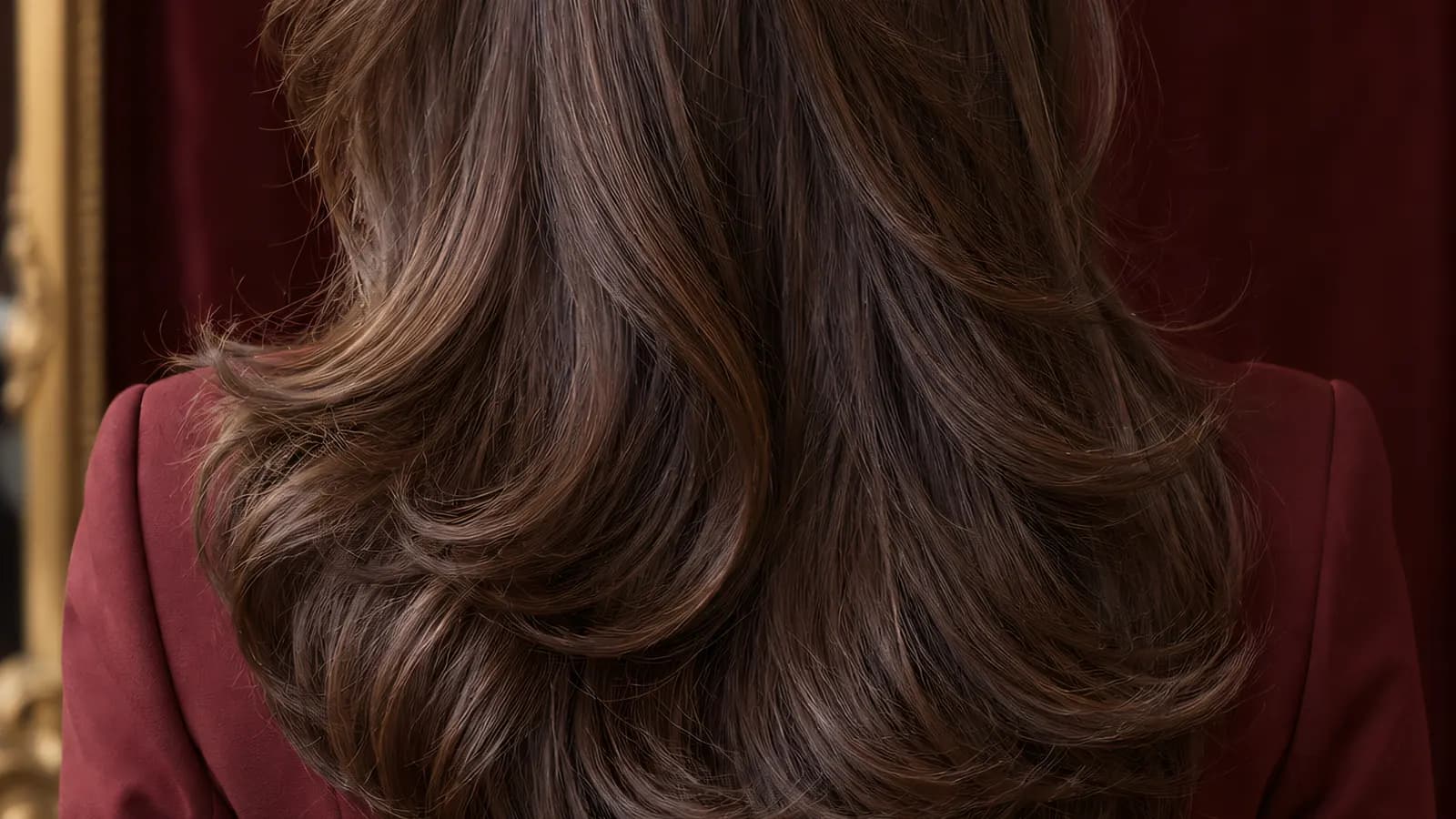
On the second morning, a blow-dry has not disappeared: it has simply relaxed. The ends have lost a little of their curve, the root has flattened against the pillow, one strand has taken on a kink.
It is not about starting over, but about reworking the few places that show. With the right moves, a few minutes in front of the mirror are enough.
It all starts the night before
The second-day blow-dry is prepared on the first evening. Hair that has spent the night crushed against a rough cotton pillowcase takes far more work than hair that has been protected.
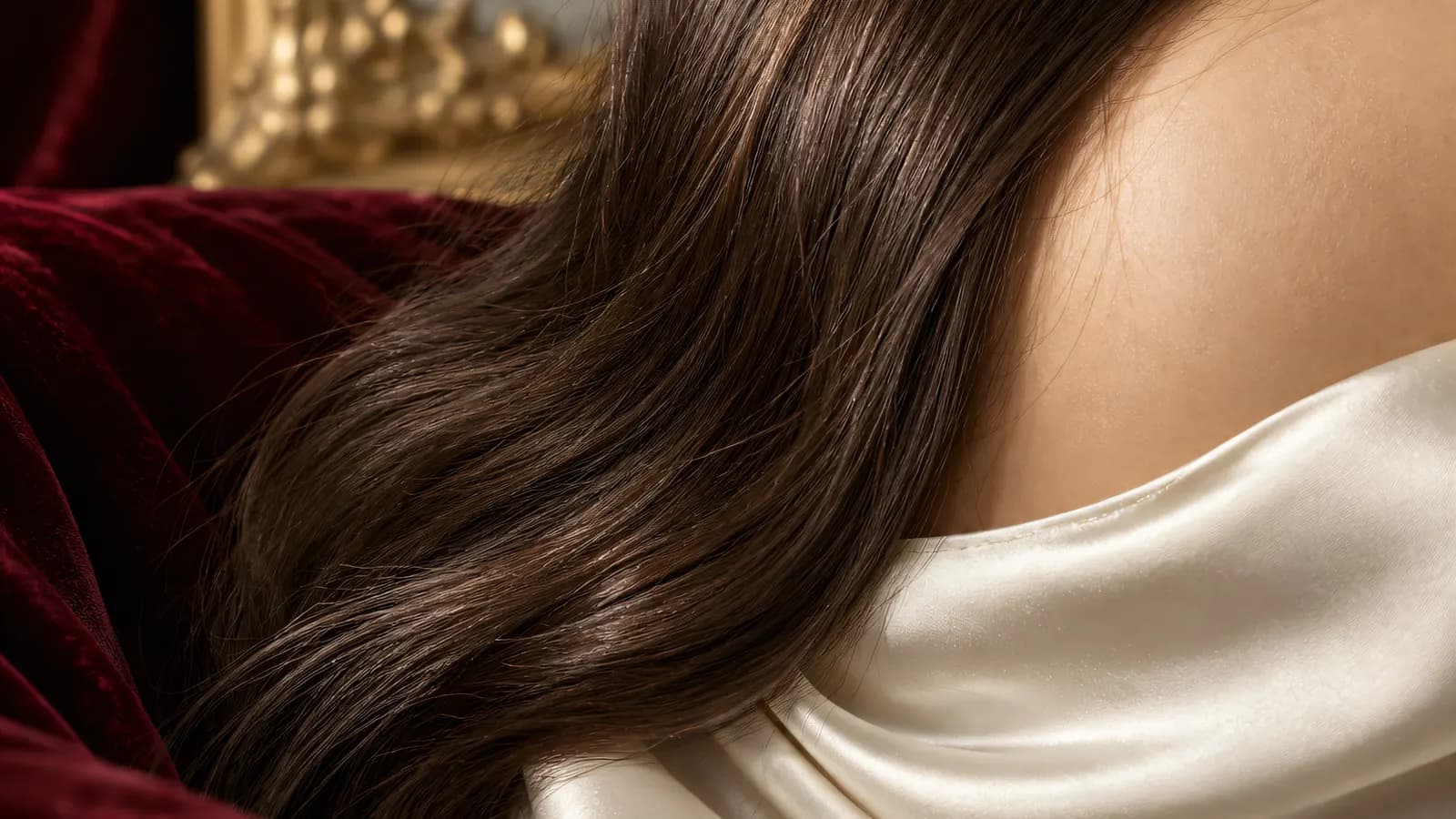
- A silk or satin pillowcase limits friction.
- A very loose bun on top of the head keeps the movement in the ends.
- Two flat clips on the fringe stop it from twisting.
We devoted a whole article to this bedtime routine: making your blow-dry last overnight. The gentler the night, the shorter the morning.
Day two: reworking the essentials
On waking, resist the urge to run a flat brush energetically over the whole head. Start by undoing the bun and letting the hair fall.
Run your fingers through the lengths, head tilted slightly forward, to separate the strands and give the root some air. Then look at where the blow-dry has really shifted. Most often, it is three areas:
- The strands around the face, which we touch without noticing and which have rubbed against the pillow.
- The top of the head, where the root has flattened.
- The ends at the nape, crushed by a collar or the back of the sofa.
The round brush, only where it is needed
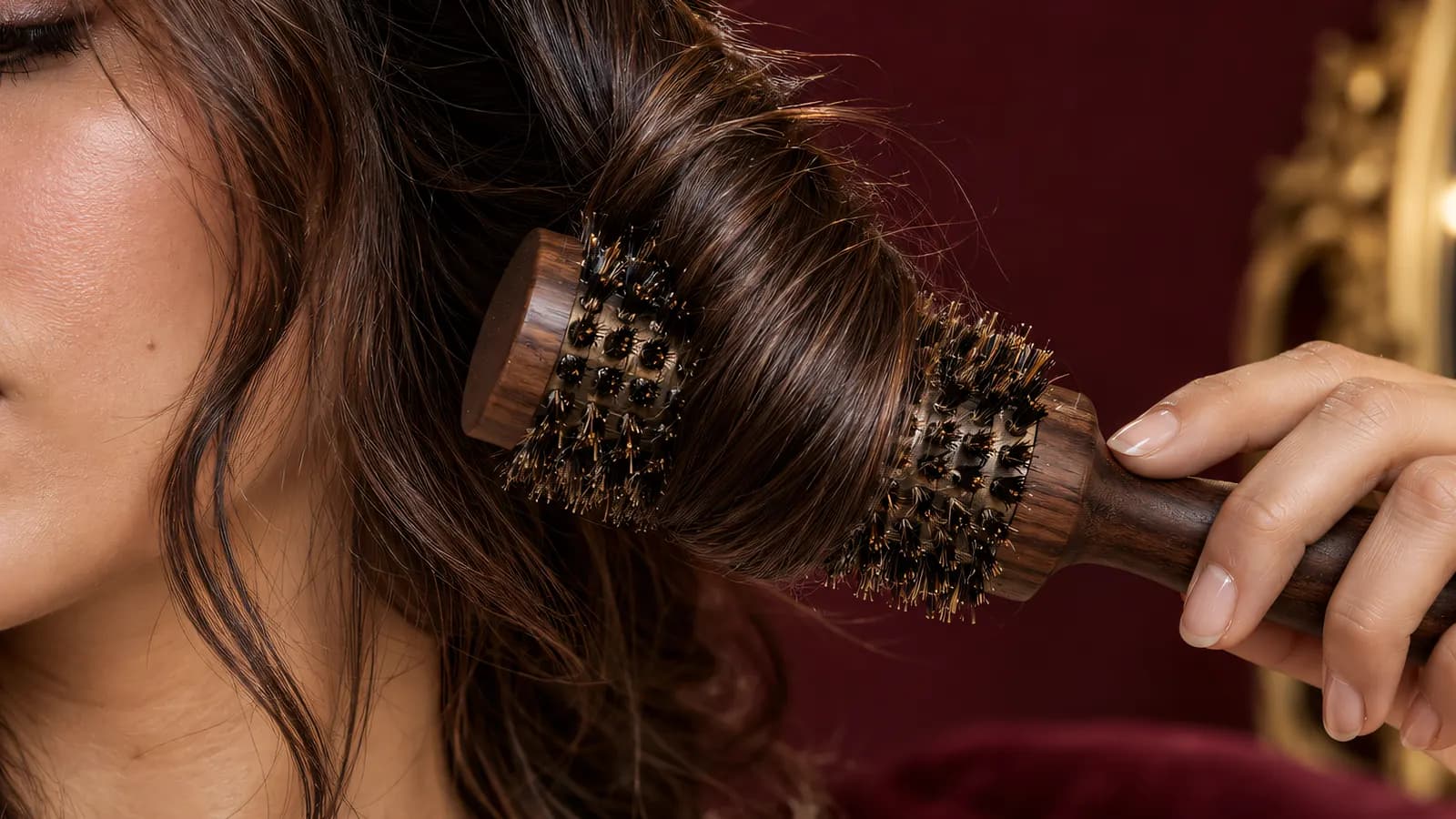
For these areas, rework one strand at a time, in this order.
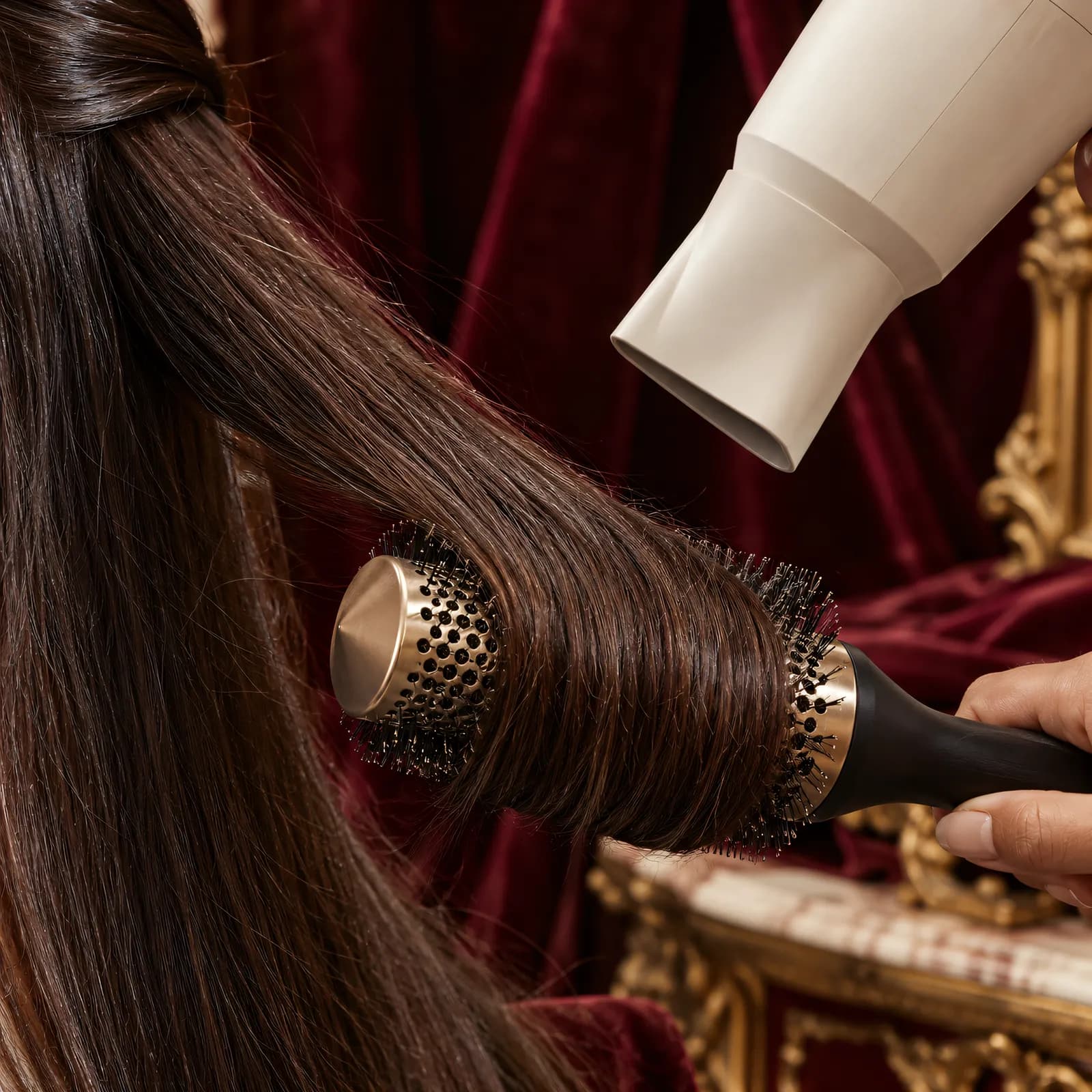
Roll.Lay the strand on a round brush, without twisting it.
Heat.A few seconds of warm air, guiding the brush down towards the end.
Cool.Switch to cool air before releasing: that is what sets the shape.
A strand released while still hot drops straight away, exactly as during the blow-dry. For a soft finish, focus on the curve: let the end cool while still rolled, count a few seconds, then unroll gently.
Morning rollers
If you have a little more time, set two or three large self-gripping rollers on top of the head and near the face. A breath of warm air, then forget about them while you do your make-up or have breakfast.
As you take them out, the root is lifted and the strands around the face have found their curve again.
Day three: root and ends
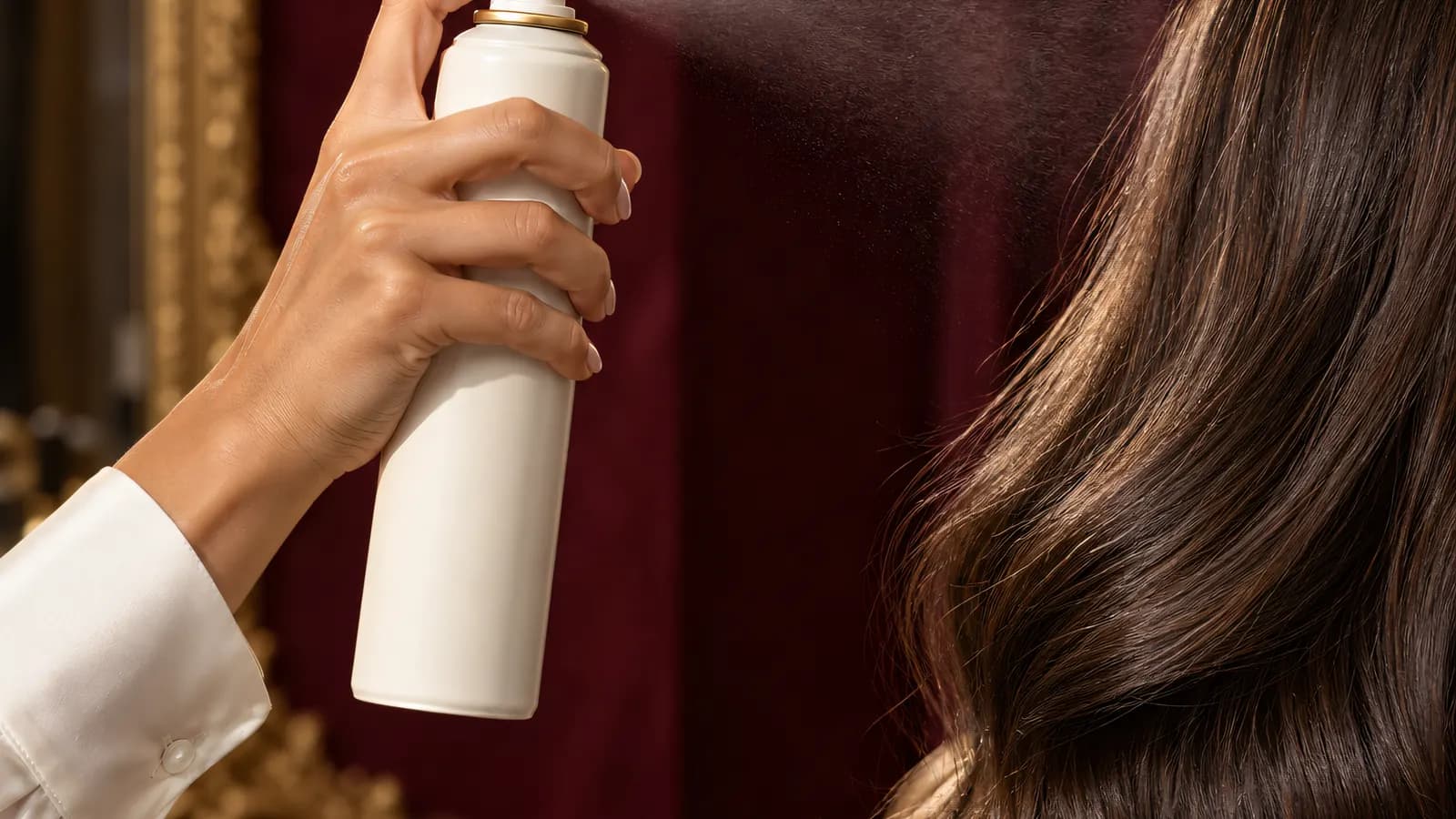
On the third day, the question is no longer just shape, but also how fresh the root is. If it starts to shine, it is time for dry shampoo: on dry hair, at the root only, then brushed through.
The full method is in our article dry shampoo after a blow-dry.
For the ends, the same move as on day two is often enough. If they have lost their hold, a quick pass with the straighteners can help on just a few strands, always on dry hair and with a heat protector.
No need to go over the whole head of hair: that is the best way to tire it out.
You do not redo a blow-dry on the third day, you rework three strands.
The moves that undo everything
Some morning habits seem to refresh the hairstyle and in fact undo it.
- Spritzing with water. Water relaxes the bonds that hold the shape. A wet strand heads back to its natural state, and you have to dry it completely to get it back.
- Showering without protection. Steam alone is enough to make the root swell and the nape curl. A well-fitted shower cap, and the door left ajar.
- Adding oil to the root. On dry ends, a drop can add shine. At the root, it weighs everything down and brings the wash forward.
- Touching constantly. Every pass of the hand leaves sebum and relaxes the shape.
Depending on your finish
Not every finish revives in the same way.
| Finish | The morning move |
|---|---|
| Soft | Ends rolled on the brush |
| Sleek | Brush pulled taut, or straighteners on a few strands |
| Volume | Head upside down, then rollers |
| Curls | Twirled around the finger, without brushing |
The soft blow-dry is the easiest to rework: it ages gently, and a few rolled ends give it back its first-day look. Curls, for their part, are not brushed: you would turn them into a vague wave. Left to themselves, they relax into a wave, which suits them very well too.
To know how long you can reasonably count on your hairstyle, read how long a blow-dry lasts.
When it is time to start again
There comes a morning when the moves are no longer enough: the root is heavy despite the dry shampoo, the ends no longer hold their curve. That is the right moment to wash, then come back to a full blow-dry.
For the next one, come with clean hair, without oil, serum or styling product. You choose your length and your finish online, then a free slot, and the address is Avenue d'Yverdon 4, 1004 Lausanne. The email confirmation gives you the directions.
If you like a hairstyle that revives easily, book your soft blow-dry.
Frequently asked questions
- Can you lightly wet your hair to revive a blow-dry?
- Better to avoid it. Water undoes the shape created by the blow-dry, and a dampened strand has to be completely dried with the brush to regain its hold.
- How do you revive a fringe in the morning?
- Rework it with the round brush or a flat brush, on warm air, directing it the way you want, then on cool air. If it has gone greasy, a touch of dry shampoo at its root is enough.
- Do you need straighteners to revive a blow-dry?
- No, the round brush and hairdryer are enough in most cases. Straighteners can rework a few stubborn strands, on dry hair and with a heat protector.
Did you enjoy this article?
Send it to a friend who is hesitating between two finishes, or keep it for later.