Does a blow-dry damage your hair? Heat, frequency, care
It is never the heat alone, it is the hand that guides it.
By Manel, M BRUSH5 min read
N° 03
Styling and care
The essentials
A well-executed blow-dry does not damage healthy hair: the hairdryer's air, kept moving and at a distance, is far gentler than an iron pressed onto the strand. Damage comes mainly from heat that is too strong and too frequent, from excessive tension on fragile hair and from a lack of protection.
The question comes up often, and it is a fair one: does a regular blow-dry wear out your hair? The honest answer fits in one sentence. It is not the blow-dry that damages, it is the way it is done.
Controlled heat, a clean gesture and a sensible frequency preserve the fibre. Excessive heat, repeated every day without protection, eventually leaves its mark.
What heat does to the fibre
To understand, you need to know how a blow-dry works. Hair holds its shape thanks to two kinds of bonds.
- Disulphide bonds, the strongest, only shift with chemical products: that is the territory of perming or chemical smoothing.
- Hydrogen bonds, the most fragile, break as soon as the hair is wet and re-form as it dries.
A blow-dry works only on those bonds. The strand is stretched or wound around the brush, dried into the desired shape, and cold air sets it. It is a temporary change: it disappears at the next wash, without altering the deep structure of the hair.
Heat becomes a problem when it is too strong or too long. The cuticle, the layer of scales that protects the hair, lifts and crumbles. The hair loses its water, turns rough and breaks more easily.
The danger peaks when a very hot source touches hair that is still wet: the water inside the fibre heats abruptly and weakens it.
It is not the blow-dry that damages, it is the way it is done.
Hairdryer, brush, iron: not the same heat
| Tool | What it does | The risk |
|---|---|---|
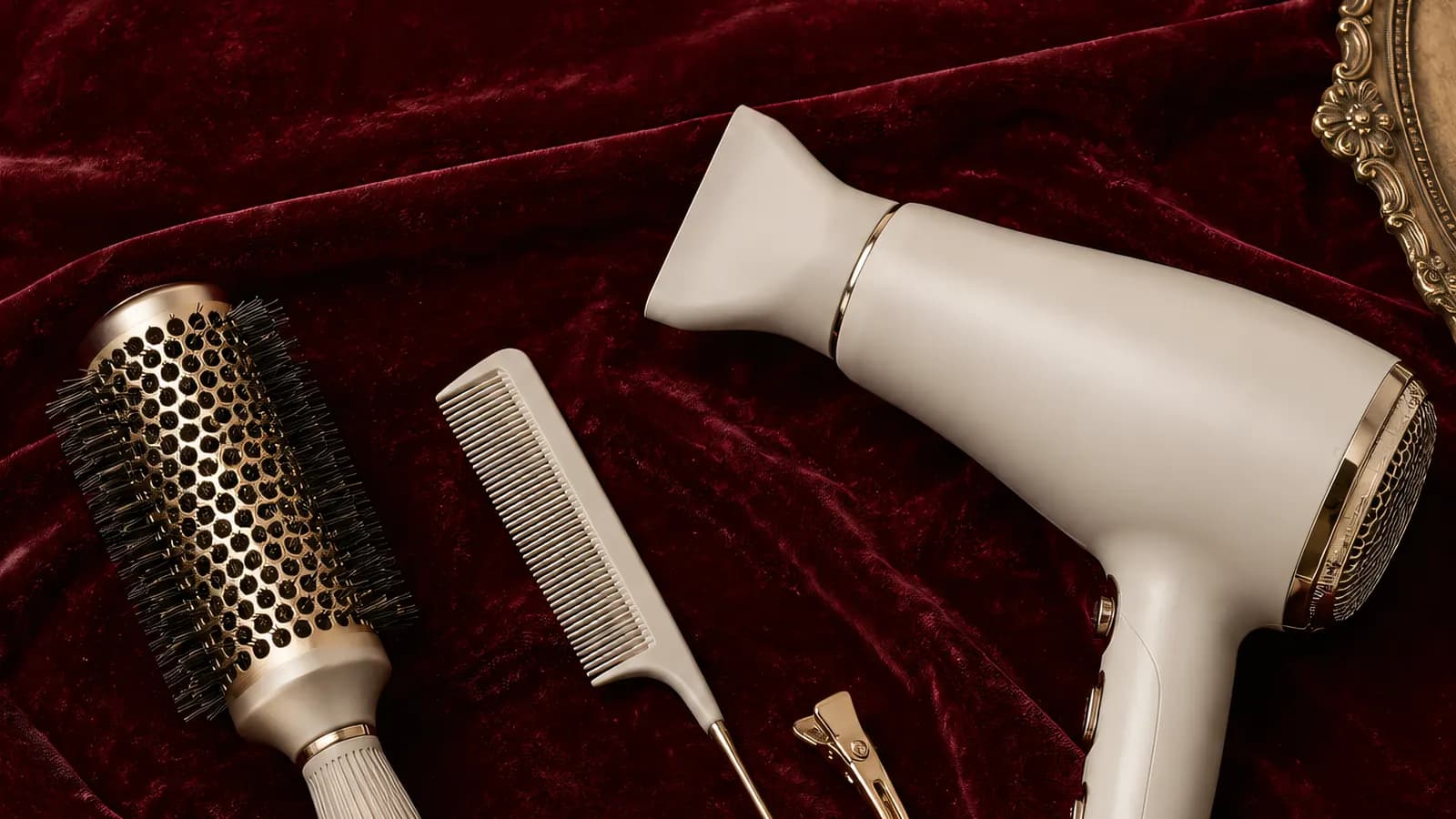
| Hairdryer | Air that passes through | Nozzle held too close, scorching air |
| Round brush | Tension, without heat | Breakage on fragile hair |
| Iron | Direct heat | Too many passes |
The hairdryer
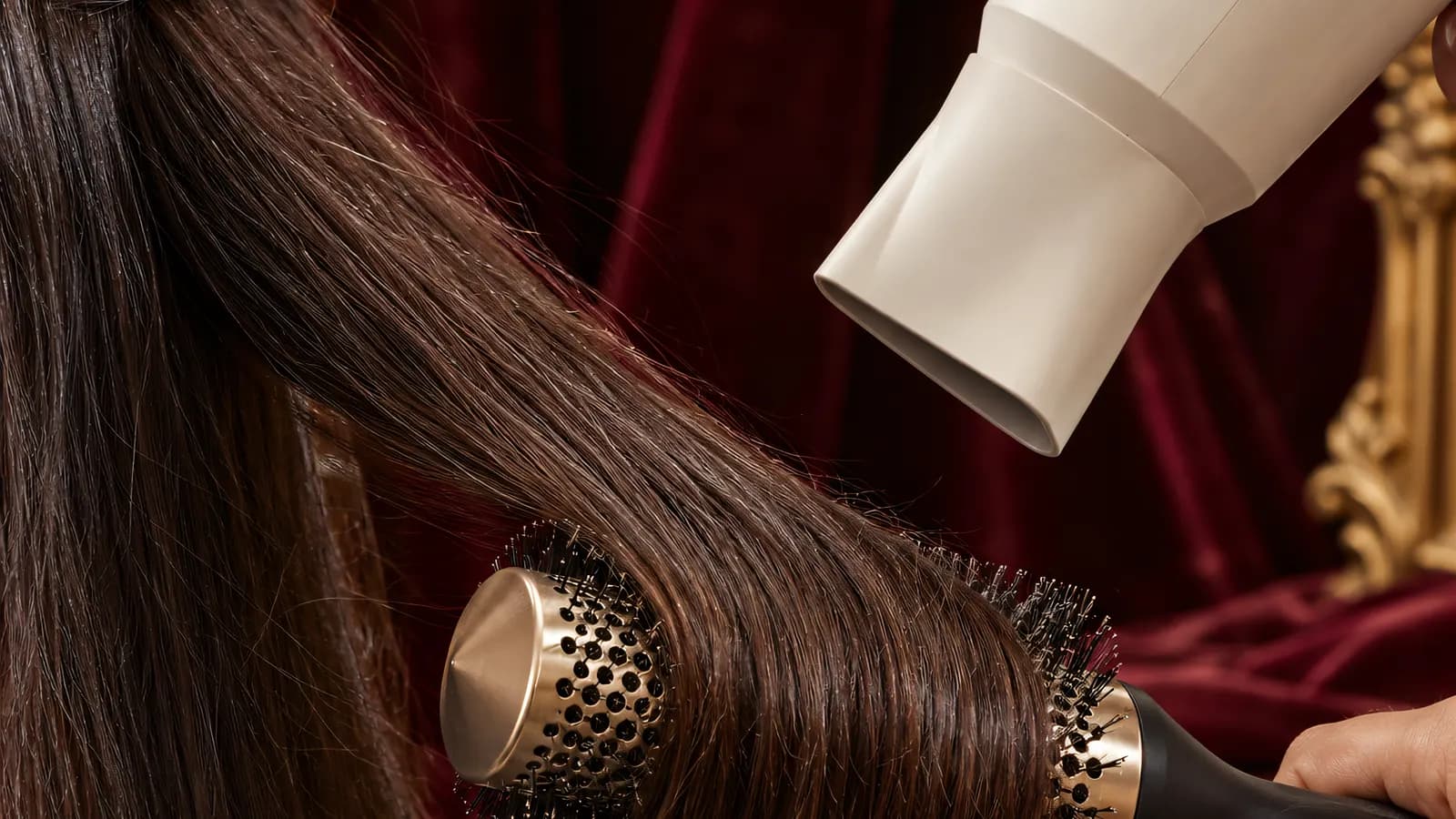
Hot air is not laid onto the strand: it passes through it, and its temperature drops with distance. Kept moving, the nozzle pointed from root to tip, it smooths the cuticle instead of ruffling it.
It is this sense of gesture that gives the sleek blow-dry its shine.
The round brush
The brush does not heat, but it pulls. On healthy hair, that tension has no consequence. On brittle hair, a strand that is too thick or a brush that snags can pull and break.
Hence the importance of gentle detangling at the start of the appointment and of fine sections.
The iron
The straightening or curling iron applies direct heat, pressed against the hair. It is useful for a sharper or longer-lasting finish, but it requires perfectly dry, protected hair, and infrequent passes.
At M BRUSH, the straightening iron is an option you tick when booking, never a compulsory step.
A sensible frequency
There is no universal rule, because everything depends on the nature and condition of the hair. A few markers all the same:
- A blow-dry done with care, once a week, suits most healthy hair.
- Daily drying at home, nozzle pressed to the strand and heat on maximum, tires the hair more than a well-conducted weekly blow-dry.
- The iron every day is the real factor in wear, especially on the ends, which are the oldest part of the hair.
A blow-dry that lasts several days has another advantage: it replaces several rushed dryings. Fewer passes means less accumulated heat.
Hair that needs more care
Some heads of hair are more sensitive than others.
- Coloured or bleached hair is more porous. It takes a blow-dry well, but with moderate heat. We cover this in the article on blow-drying after colour or balayage.
- Fine hair heats faster and breaks more easily under tension.
- Curly and coily hair is often drier by nature. Smoothing suits it very well, provided you do not multiply passes with the iron: see our guide to blow-drying curly or coily hair.
A few signs should alert you: split ends creeping upwards, hair that breaks when brushed, a straw-like feel, frizz that no longer responds. In that case, space out the heat and talk to a hairdresser.
Between two blow-dries: care at home
Cutting and colour are not on the M BRUSH menu, which offers, alongside the blow-dry, a hair botox treatment and a smoothing treatment. Day to day, care happens at home, and it counts.
- A gentle shampoo, and a nourishing mask at wash time, thoroughly rinsed.
- A silk or satin pillowcase, which limits friction at night.
- A heat protector every time you dry or style your own hair with heat.
- Ends refreshed regularly by your usual hairdresser.
On the day of your blow-dry, however, come without oil, serum or styling product, with clean hair. The whole appointment goes into the blow-dry; shampoo + treatment optional on site.
The gesture that preserves
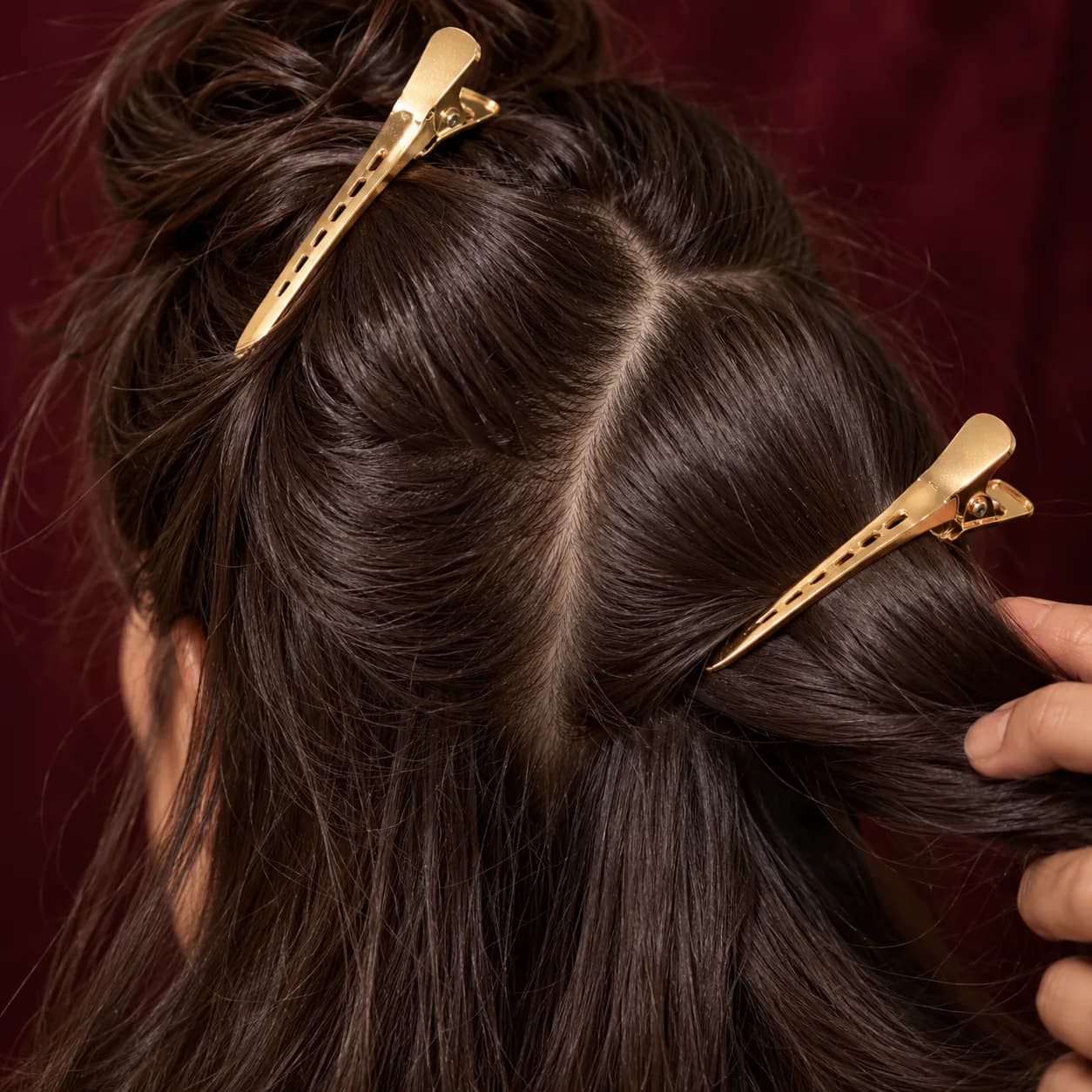
A well-conducted blow-dry spares the hair.
Detangling.Gentle, from ends to roots, so nothing gets pulled out.
Sectioning.Fine sections, which the brush takes without forcing.
The finish.A light veil of setting, without stiffness.
If you do your own blow-dries and worry about the heat, our article doing your own blow-dry details the method and its limits.
If you would rather entrust the heat to trained hands, book your sleek blow-dry, with or without the iron option.
Frequently asked questions
- Should you always use a heat protector before a blow-dry?
- At home, yes, as soon as you use a hairdryer up close or an iron. It forms a film that slows the rise in temperature of the fibre and limits water loss.
- Is it better to let your hair dry in the open air?
- Not necessarily. Hair that stays wet for a long time swells and weakens too; drying at a distance, with air in movement and moderate temperature, is a good alternative.
- Is one blow-dry a week too much?
- For healthy hair, no, especially if the rest of the week passes without an iron. On very damaged hair, space them out and favour finishes without the iron.
Did you enjoy this article?
Send it to a friend who is hesitating between two finishes, or keep it for later.